
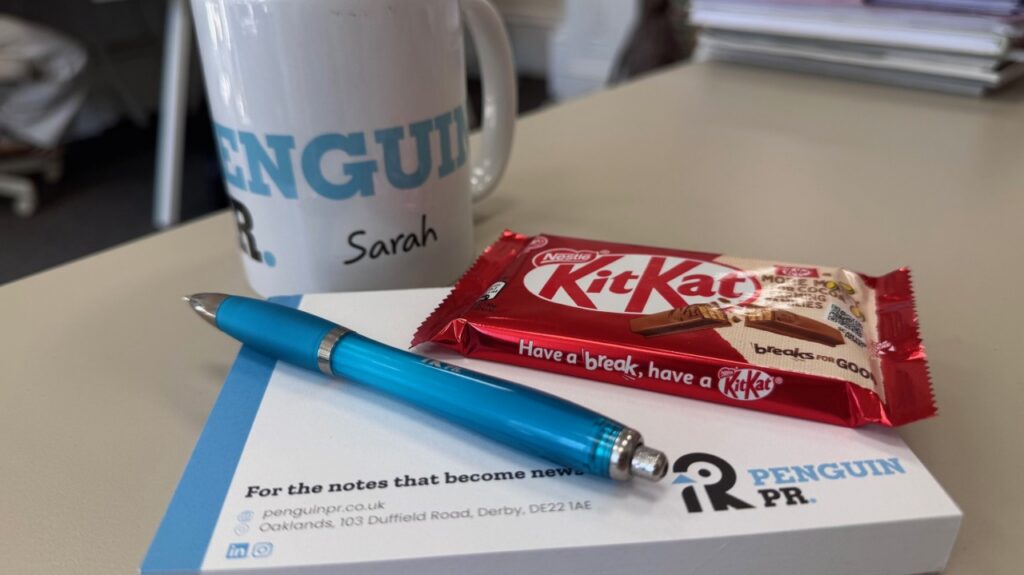
Somewhere between Italy and Poland, a lorry carrying around 12 tonnes of KitKats vanished. Just like that – hundreds of thousands of chocolate bars (and a lorry!) gone without a trace, writes Sarah Newton.
In most cases, this would be a complicated insurance claim and a carefully crafted press statement. Typical crisis comms.
And when the story first broke this is how it looked likely to play out. Nestlé confirmed the theft and treated it like a normal logistics incident by acknowledging the missing shipment, confirming the scale and that authorities were investigating.
The KitKat Lorry Theft That Sparked a PR Moment
So, the official announcement was fairly standard and low-key. But timing is everything and this chocolate heist broke just before both April Fool’s Day and Easter – making the story culturally combustible.
It landed at the exact moment when audiences are already primed for pranks and brands are actively looking for playful, shareable content. And chocolate is already front-of-mind thanks to Easter. In other words, the story fit the mood.
How Nestlé Turned Crisis into Opportunity
And Nestle’s social media team recognised that. So instead of playing it safe they went for it: “We’ve always encouraged people to have a break with KitKat – but it seems thieves have taken the message too literally.”
And that comment gave the greenlight for brands across the UK – and soon the world – to jump on board the chocolate wagon, enabling the story to take on a life of its own.
Brand Reactions: Newsjacking Done Right
Dominos was among the first. “We would like to share our thoughts and condolences with KitKat following their recent sad news,” the brand posted on X, before adding, “On a completely unrelated note, we’re pleased to announce we’ll now be selling a new KitKat pizza.”
Ikea posted a picture of one of its wardrobes – a Pax – filled to the brim with KitKats saying – “Have a suspiciously large amount of KitKat to store? Pax is here to the rescue!”
Marks and Spencer also issued an official statement: “We would like to take this opportunity to express our astonishment regarding the recent announcement of the KitKat heist. We would also like to say that the Take 4, St Michael Real Milk Chocolate 4 Finger Wafer Bar is fully stocked and available.”
For a brand not typically keen on having its own brands imitated, this was a surprise. But it subtly positioned its own product while joining the wider conversation, proving that even more traditional retailers are willing to flex their tone when the moment is right.
Pampers joined in with: “Although Pampers might be able to hold 12 tonnes of chocolate, we confirm that out babies were sound asleep during the night of the heist.”
Colgate added: “Just in case anyone has been eating a lot of chocolate. Like 12 tonnes of it. And needs to brush. There’s a shipment of Colgate toothpaste travelling from Italy to Poland next week. Low security. The driver is known to take long pit stops and leave the keys in the ignition. Do whatever you want with this information.”
McAfee sent its condolences to KitKat before adding: “We may not know where the chocolate went, but we do know this: protecting consumers isn’t something we ever take a break from.”
Even Blenheim Palace joined in: “Dear KitKat, We know how it feels to have a precious item worth its weight in gold taken from you. If you want to bond about how to recover from a grand heist, we’re here to chat.”
Different brands all showing up enthusiastically for a product they have nothing to do with. It’s a perfect example of newsjacking – where companies insert their own brand into a news story that is already trending.
Why This Newsjacking Campaign Worked
The best examples didn’t try to steal the spotlight but played along with it. It’s a reminder that successful newsjacking isn’t about speed alone (although timing is vital). It’s about understanding the cultural context and matching its tone.
Get it right, and you’re part of the conversation. The reason these worked so well was because the story – although completely true – was so ludicrous that even Nestle had to announce that it wasn’t a joke.
And although 12 tonnes of KitKat is a lot of chocolate (I’d be prepared to take on the challenge though – just saying), there was no obvious human impact, no sensitive angle, no reputational risk for others to tiptoe around.
That created the perfect conditions for brands to engage.
Because the reality is, not every news story is appropriate to jump on. In fact, most aren’t. But when a story is light-hearted, absurd and culturally aligned – like this one – it opens the door for brands to show personality without backlash.
What PR Professionals Can Learn from KitKat
This is where PR becomes less about control and more about instinct. It’s about companies trusting their PR and marketing teams to know when to step in and how far to go.
Because sometimes, the biggest wins don’t come from the campaigns you plan, but from the moments you recognise. And in this case, the result speaks for itself.
What started as a lost shipment turned into global headlines, viral social content and brand mentions far beyond what any paid campaign could possibly hope to achieve. The reach, engagement and cultural relevance generated in a matter of days would have cost millions to replicate.
Which raises the question: from a PR perspective, was it almost… worth it?
Not the theft itself, of course. But the outcome? The awareness? The brand visibility?
I’d imagine that’s a resounding yes, because in a world where attention is the most valuable currency, KitKat didn’t just lose 12 tonnes of chocolate – it gained something far more powerful.
Now, where is my cuppa – I’ve got some chocolate somewhere…
Want to make your brand part of the conversation? Get in touch with Penguin PR to create campaigns that deliver real impact.