A primary school for children who have been excluded from mainstream education has invested £15,000 in buying computer equipment for pupils who are being home-schooled.
Newton’s Walk Pupil Referral Unit, in Cedar Street, caters for 40 children aged between 7 and 11 years old and every pupil on role at the school is classed as ‘vulnerable’.
Around 50 per cent of its pupils have still been attending the school during this lockdown, but IT equipment was required by many of the others so that they could learn online.
The Department for Education provided Newton’s Walk with four laptops and the school has bought a further 20, along with dongles for children with no internet access and laptop bags to protect them.
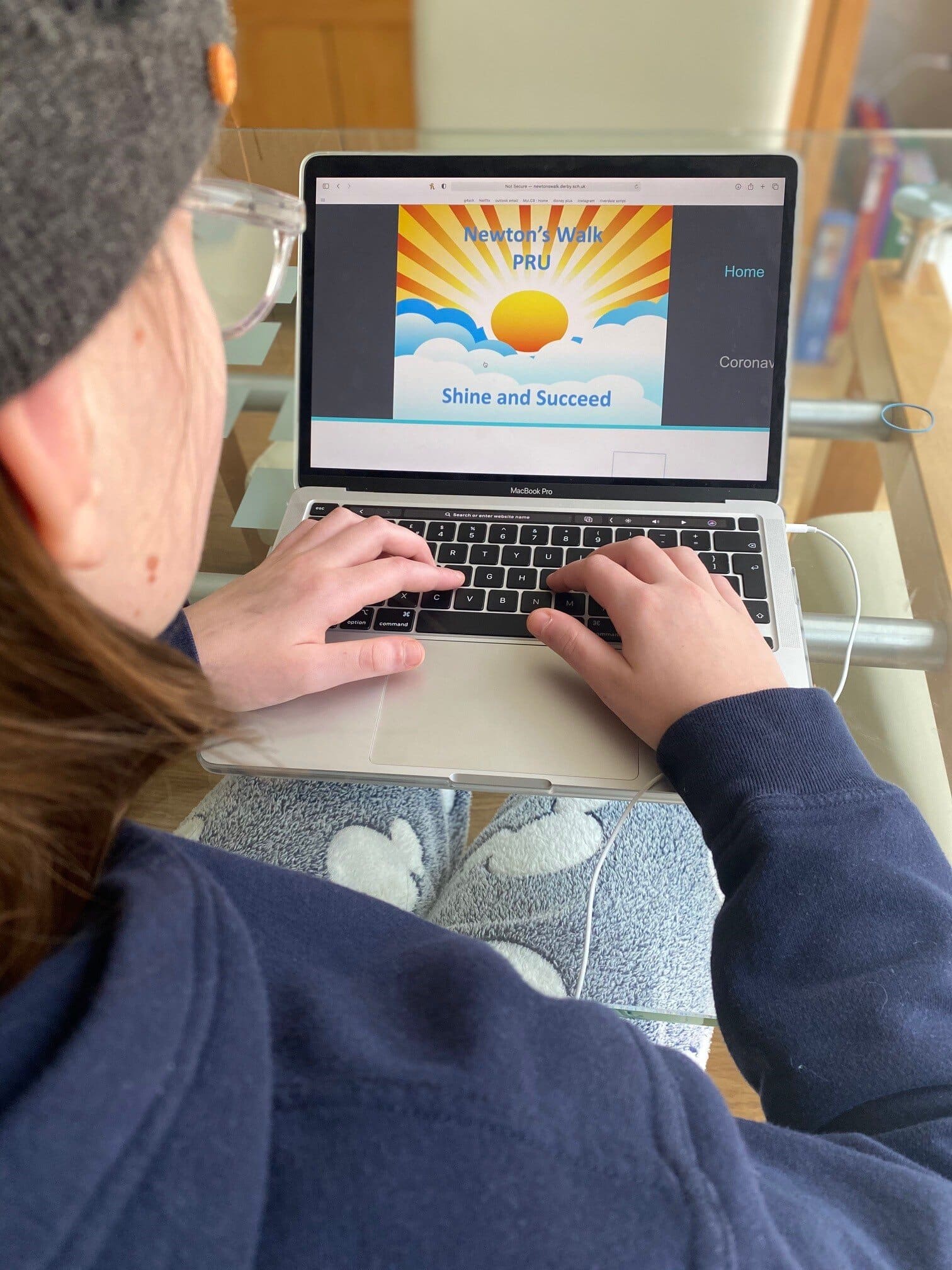
Head of primary Lia Copestake said: “Throughout lockdowns we have been providing pupils with paper packs of work, because not all of the children who come to Newton’s Walk have access to the internet.
“Home-schooling can be impossible for families who do not have internet devices, or a reliable broadband connection, especially when multiple people need to be online at the same time.
“It took a little time to get all the suitable firewalls and safeguards installed, then our family support workers delivered the laptops in person, wearing PPE.
“Now every pupil can access our learning platform and we are able to give daily feedback on work and connect with pupils, providing them with the much-needed support and encouragement that they require.”
All the pupils at Newton’s Walk have all been excluded from mainstream education are also on the Special Educational Needs Register with many in receipt of an Educational Health and Care Plan.
Around 90 per cent are either pupil premium or eligible for free school meals and are all considered to be vulnerable owing to their previous permanent exclusion.
Earlier this month, the Government delivered 801,524 laptops as part of its bid to get more than a million devices to schools and colleges during the Covid-19 crisis.
But according to Ofcom, between 1.1 million and 1.8 million children do not have access to a laptop, desktop or tablet at home, which suggests the Government scheme is not nearly enough.
Despite the extension of lockdown and the continued disruption to their education Mrs Copestake is convinced Newton’s Walk pupils will cope well when they finally return to school.
She added: “There has been a lot of talk about the recovery curriculum and how teachers will reengage children in the process of learning, and this is what we do at Newton’s Walk all year round.
“Our pupils have had a disrupted school life anyway which finally resulted in their permanent exclusion, so we specialise in helping children to adjust. Newton’s Walk isn’t their local school, they come from all over the city and will often have had a period away from education before starting here.
“Many of the elements of a recovery curriculum, such as listening to children, teaching in small groups, talking about emotions, adjusting to learning ‘how to learn’ for muscle memory and developing resilience are all strategies we employ.
“We are finding that the pupils who have already returned to school are very chatty and although we speak to pupils and their parents regularly, the laptops have been an additional way to connect with them.”
ENDS
For further information please contact Sarah Newton at Penguin PR on 07974 502 764 or email [email protected]