

Functional Skills learners are increasingly struggling with speaking, listening and discussion skills post Covid, say resources providers who have seen a surge in demand in the area.
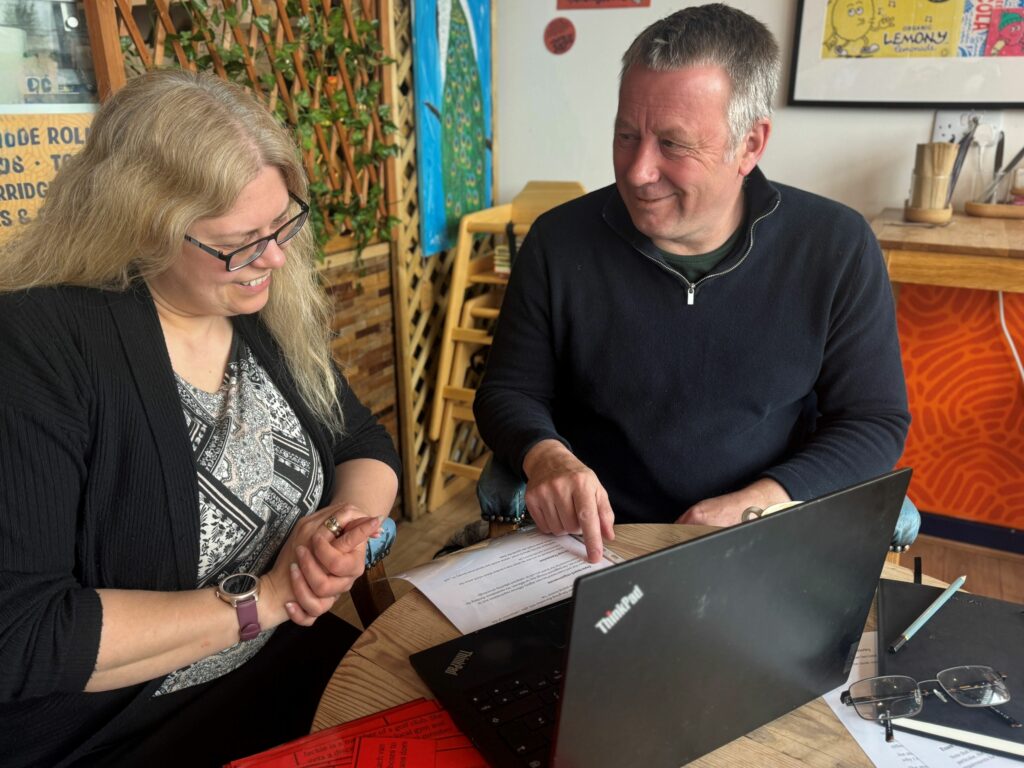
Nottingham-based Pete Middleton and Lyn Calver, who create and supply resources for UK learners undertaking functional skills qualifications, have reported a big increase in need for those requiring help in the speaking and listening aspects of the tests.
Functional Skills qualifications – an alternative to GCSEs undertaken by around half a million people each year in the UK – include a requirement for learners to take part in a discussion as well as give a talk on a topic of their choice.
While young people getting their GCSE results this summer will have been assessed on their skills in giving a talk, the ability to successfully take part in a discussion is unique to functional skills qualifications.
Lyn said the Functional Skills Resources team had seen a marked increase in learners struggling with skills in speaking, listening and discussion following the Covid period which had significantly affected young people’s face to face communication.
Lyn, a trainer from Staffordshire who has been involved in further education for many years, said: “We are seeing more young people now who are struggling to articulate themselves. You ask them a question and every answer is, ‘I don’t know’. I think the divide between those who can and can’t articulate themselves is growing wider.”
To pass the speaking and listening element of their functional skills test – vital for entry into many careers for those who have not passed English and Maths GCSE – learners must take part in a discussion lasting between ten and 15 minutes on a topic given to them in advance.
Participants are assessed on their discussion skills which include speaking clearly so they can be understood; sticking to the topic; listening carefully and responding to other people; showing they have done some research; asking questions and answering them; showing they understand information; clearly communicating their opinion and interjecting and responding appropriately.
The Functional Skills Resources site run by Lyn and Pete contains guides for tutors helping young people to successfully take part in a discussion.
Lyn said: “The discussion part of the functional skills qualification is quite a test and it’s not something that people sitting GCSEs need to do. To pass, you need to not sit quietly for the discussion and let others talk, which is all too easy to do if you’re a bit shy and not great at talking.
“You are required to take part and listen to other people’s points of view, while not dominating either. You are also assessed on your ability to successfully interject – not necessarily an easy skill even for people who aren’t trying to pass their functional skills test!
“Our resources are designed to help tutors prepare students for this and we have seen a big surge in demand for them. We guide you through how to prepare learners, offering prompts and other tips to help people pass the test. It’s important that students prepare for the discussion in advance so they have clearly done some research. It’s also key that they are polite, so we have included some suggestions to help reinforce the need for respectful participation.
“There are other ways that learners can present themselves well. We give guidance for tutors to help them prepare students in things like how their body language lets people know they are listening carefully. Making eye contact, nodding to show you’ve understood – these are all key skills that we need to equip people in.
“Covid has had a big impact on young people in ways that are perhaps still being understood. Conversing and presenting ourselves is just one of those and at Functional Skills Resources we aim to help tutors support young people in gaining these skills that were significantly affected during lockdown.”
Access to Functional Skills Resources is available for as little as £11.97 a month for an individual user. For more, see https://functionalskillsresources.co.uk/
For more information, please contact Lucy Stephens at Penguin PR on [email protected] or call 0771 983 9446


