A Derbyshire head teacher says the Government’s plan to reintroduce GCSE exams for schools in England and Wales next summer is “grossly unfair” – even though students will have three weeks longer to revise.
Mark Cottingham, principal of Shirebrook Academy, believes that the decision to require the current Year 11 students to sit exams next year is fundamentally flawed, because of the dramatic effect that the covid-19 lockdown is having on their learning.
The Department for Education this week confirmed that Year 11 students will take their GCSE exams as usual next year, albeit that one English and one maths exam will be taken before May half term and the rest will start three weeks later than usual.
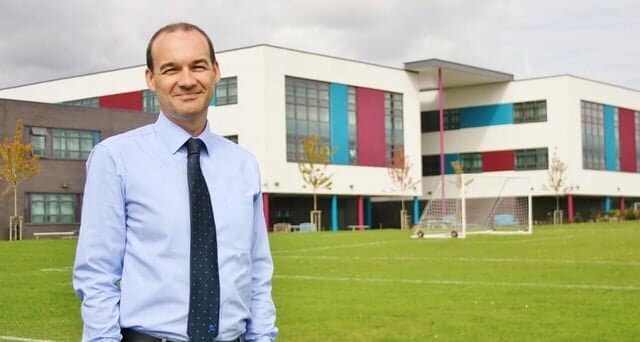
Mark Cottingham, principal of Shirebrook Academy, says the Department for Education’s decision to bring back GCSEs for students next year is “grossly unfair”.
However, Mr Cottingham says that he would prefer for exams to be scrapped for another year, with grades being decided by the schools instead, which is what happened this year in the wake of the coronavirus lockdown.
This is because while the current Year 11 students are now back behind their desks, they are likely to be sent home to self isolate at points during the year, a situation that will vary from student to student, school to school and area to area.
As a result, they are likely to miss many more days’ worth of in-school learning, which impacts most heavily on students from more disadvantaged homes, where they are less likely to have somebody at home to support their learning and less likely to have the technology needed to support remote learning.
This, said Mr Cottingham, is what makes the situation so unfair, especially in a town like Shirebrook, where the number of disadvantaged students is higher than the national average. Mr Cottingham added:
“Scotland has already announced that it has scrapped exams for next year and England and Wales should follow its lead, because it will lead to a situation that is grossly unfair, in my opinion.
“Everyone understands that the coronavirus is nobody’s fault, but this decision will compound the inequalities faced by disadvantaged students who can lack the family support or technology at home that more privileged peers take for granted.
“Ordinarily, that factor is lessened because, in the classroom, everyone is equal. However, the current Year 11s have already spent months away from the classroom and the rules around self-isolation mean that there is a high likelihood that they will be doing more remote studying before the school year is out.”
This summer the Government replaced GCSEs and A-Level exams with teacher assessments, with students being given a grade based on the work that they had carried out during the past two years of study.
Mr Cottingham said: “It took the Government a long time to decide what to do and although it wasn’t perfect, it was the fairest outcome for everybody in the end.
“The best thing to do would be to use a similar system next year, because while everyone understood the stress and anxiety that this year’s cohort experienced, in my view the current Year 11 students are in a much worse position.
“The previous Year 11 students had nearly two years’ worth of uninterrupted study and didn’t have to sit an exam at the end of it, but it’s the other way round for this year’s students, because they’ve lost months’ worth of learning, they’re likely to lose more, and they’ll still have to sit their exams.
“Exams are an imperfect way to judge someone’s performances at the best of times, but they are wholly unsuitable at this moment and, far from closing the equality gap, the Government’s decision will only blow it even more wide open next summer.”
ENDS
For more details contact Simon Burch at Penguin PR by ringing 01332 416228 or 07735 397888 or emailing [email protected]