Deaf children in Derby have been taking part in a pioneering research project which has allowed them to access music though their hands and feet.
The music department at The Royal School for the Deaf Derby, in Ashbourne Road, was approached by professors from the University of Liverpool acoustics research unit to help with a ground-breaking project.
They wanted children aged between five and 11 to try out their latest technology, called vibrotactile equipment, in an educational setting to see if it improved their ability to understand music.
The technology has been loaned to the school and the results have been breath-taking, with children able to feel the difference between high and low notes, following rhythms and creating music on different instruments collectively.
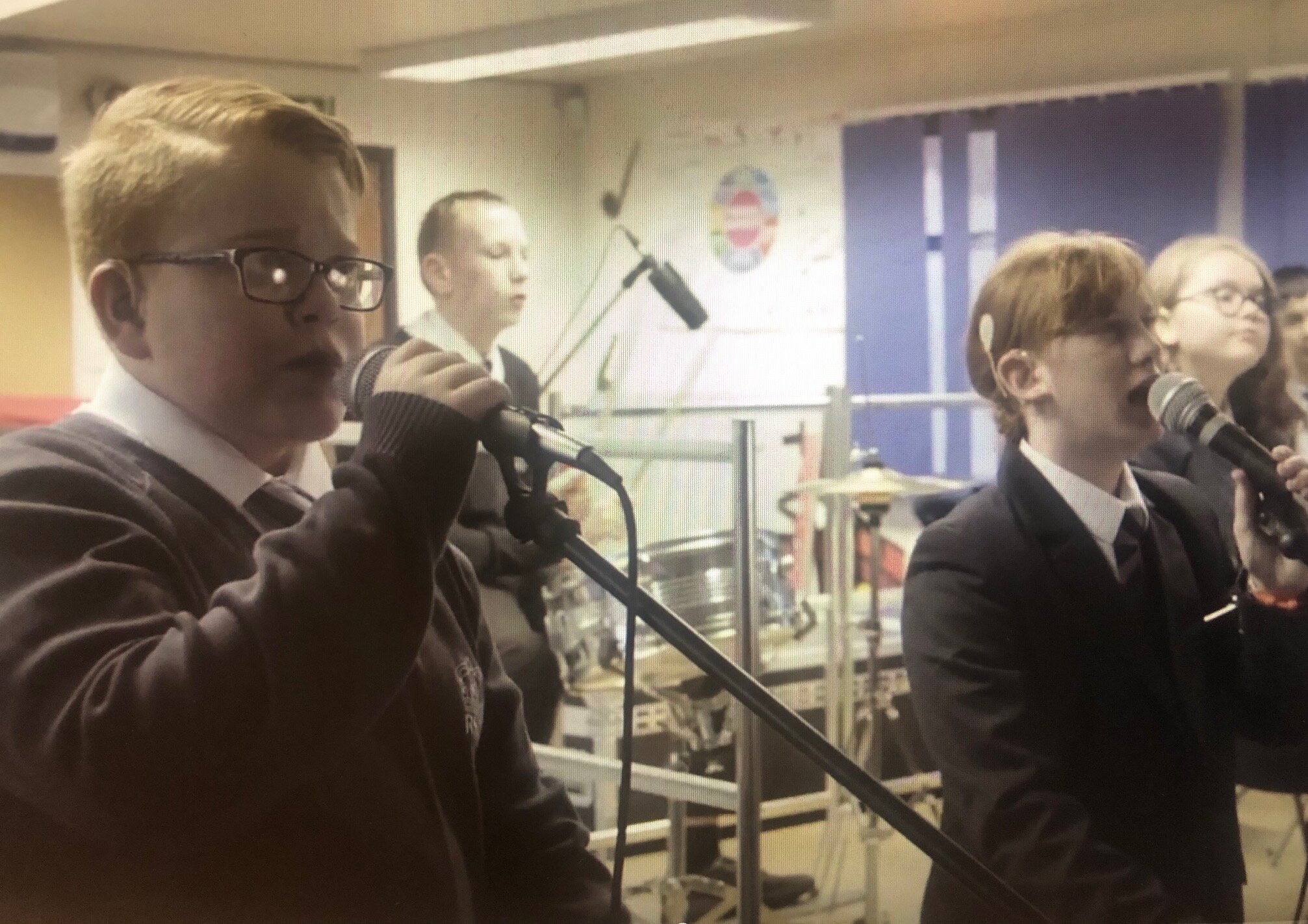
Pupis from Royal School for Deaf took part in a pioneering project with the University of Liverpool
The school has been so impressed with the technology that it is now hoping to raise money so they can buy their own vibrotactile equipment, although the cost runs into thousands of pounds.
Music is normally delivered to the brain through vibrations in the ear, but this technology uses vibrations through the skin to allow a person to perceive music.
Children at the school have been able to play different kinds of electrical instruments and feel the sounds by placing their hands and bare feet on mechanisms called shakers.
Music teacher Matthew Taylor said: “We were initially approached by the university two years ago, so I went up to Liverpool to see how it works and whether I thought our children, who are mostly profoundly deaf, would benefit from it.
“It is extremely hard to explain music to someone who has never heard sound, so I was keen to see how the vibrotactile equipment would work in the classroom – and it has certainly given our children greater access to what I am trying to teach them.
READ MORE: Rolls-Royce celebrates Royal School for the Deaf Derby’s rich heritage
“They are able to distinguish high, low and medium notes as each frequency vibrates in a different way and it also allows them to ‘feel’ their own voices by using a microphone which was incredibly exciting for them. It’s impossible to imagine having little idea of the sound that comes out of your own mouth – but suddenly feeling the noise is incredible for them.
“By feeling the vibrations it actually allows us to play together and then we are able to start making some music collectively which is incredible and very moving for everyone involved.
“I’ve noticed a great kind of improvement in engagement in lessons from students. They are genuinely interested in using the equipment, often shoes and socks are off before the lessons starts, and a lot of the teamwork we’re seeing is impressive too.”
Sound is made up of vibrations and when those vibrations are organized and given a pitch, they become music.
In deaf people the brain adapts to interpret sound and music in a way other than through messages from the ears.
Since deaf people lack one of the five senses, their other senses, through brain plasticity, work together to make up for the loss of hearing.
Therefore, the part of the brain that recognizes tactile, or touch, feedback works harder in deaf people making them more receptive to the vibrations from the music.
Not only has the experiment allowed children at the school to access music, it has also allowed them to access emotions and staff say the equipment could also be used to aid wellbeing.
Mr Taylor added: “Music can be a powerful tool in arousing emotion and typical listeners will associate basic or primary emotions such as happiness, sadness, fear, and anger to musical compositions.
“This has been more difficult for deaf children before, but thanks to the technology some of the pupils are able to pick up the inference of a piece of music.
“The equipment could certainly be useful for wellbeing or music therapy classes as another method for our children to express themselves.”
The school already has a keen signing choir and the satisfaction of feeling vibrations, and being able to communicate through music, has given children at the school enormous pleasure.
Head teacher Helen Shepherd said: “Although our students are deaf they are keen music makers and this equipment means that deafness is certainly not a barrier to making or appreciating music.
“We have worked hard to help our pupils learn to appreciate musicality in a multitude of ways, through vibrations, gestures, body movements, rhythms and even by reading music on the printed page.
“But it has been incredible to watch the children light up during lessons with the vibrotactile equipment and seeing them able to access music in this way has been really very special.
“A hearing mum told me how proud she was that her child sang into a microphone. It made her cry and it was extremely emotional for her to watch.
“When the whole group were working together we saw a lot more interaction, taking in turns, focussing on the teacher, sitting down, they were really interested in learning about high and low pitch and understanding the difference. So, the social interaction between pupils has really improved.
“Music is all around us and to those of us who can hear life without music is inconceivable. We are very grateful to University of Liverpool for including our pupils in this powerful experience.”