
Former England striker Ian Wright may have made the headlines by declaring FIFA’s latest tournament the World Cup of chaos, but the history books show it is far from the only one mired in controversy, writes Simon Burch.
It’s certainly true that it’s been beset by issues, including the latest outrage, the USA’s refusal to admit a Somali referee into the US making worldwide headlines.
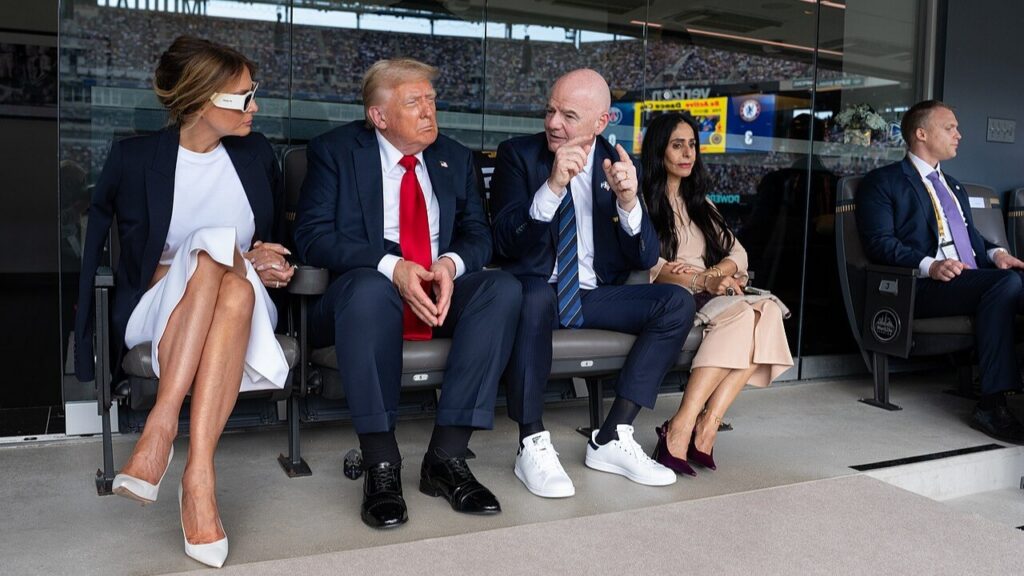
Added to that are the accusations of extortionate ticket prices, visa refusals for Iran’s key managerial and administrative members of its delegations and the baffling decision to widen the tournament into featuring 48 teams.
All in all, there is certainly a lot for Ian Wright to go at, and there has been a lot of head-nodding in agreement with him across the media, especially when, just last night, FIFA head Gianni Infantino advised everyone just to chill and enjoy the football.
Cue more outrage, understandably, but I suspect that Infantino has remembered something that many other people too easily forget – that there has never been a World Cup in history that hasn’t had a whiff of political intrigue about it, and when it’s all done and dusted, it’s always the football that sticks in the mind.
Take four years ago, in Qatar. In the lead up to the event, the news was full of stories of migrant worker deaths, human rights abuses, the lunacy of playing a World Cup in the winter and a bribery scandal that awarded the tournament to Qatar in the first place.
But what was the takeaway from the tournament? That it featured a final for the ages, a genuinely nail-biting contest starring two of the biggest names in the game, Kylian Mbappe and Lionel Messi.
Or there’s Argentina 78. According to folklore, it was the tournament of sublime football, when Scotland’s Archie Gemmill scored one of the most incredible goals in World Cup history and when Argentina’s Mario Kempes set the tournament alight with his skills.
Great stuff.
What doesn’t often get remembered is how there was a pre-tournament campaign calling for teams to boycott the World Cup because of the ruthlessness of the host nation’s ruling military junta, which was accused of using it to whitewash its horrific human rights abuses.
And, after the tournament, the world discovered what human rights groups had been telling them all along, that, just 10 minutes from the national stadium and in earshot of the cheers, the government was torturing and killing captives at the notorious Navy School of Mechanics.
Somewhat further back, in 1934, Italy hosted the second-ever World Cup at a time when the fascist dictator Mussolini was in charge and Italy fielded three players who had previously been capped by Argentina.
And don’t forget Spain 1982, which began while Britain was still fighting the Falklands War against Argentina and then-Prime Minister Margaret Thatcher was considering withdrawing the UK teams – England, Scotland and Northern Ireland.
Many felt that it was wrong that the teams should be playing in the same tournament as Argentina, who were also appearing in Spain, while British military personnel were losing their lives.
In the end, the teams stayed in, because it was decided that to pull out would be a diplomatic own-goal and a propaganda win for Argentina.
And it’s a good thing they did if you’re a Northern Ireland fan, who remember 1982 fondly as the tournament when their team caused one of the biggest upsets in football history, beating the hosts, Spain, and nearly reaching an improbable semi-final.
It is perhaps highly telling that, when push comes to shove, the football-loving public will put any moral concerns aside and gladly accept a commercial product that right-thinking folk are falling over themselves to declare tainted.
It’s also pretty incredible that any country would want to host a World Cup either, since there seems no better way to get yourself some bad PR than stage a major tournament and have the world’s media scrutinise everything from your infrastructure to your immigration policy, your human rights record to the conditions your people live in.
But if Russia can do it, Qatar can do it, fascist Italy can do it and now Trump’s USA (along with Mexico and Canada) can do it, then it shows that the power and appeal of football can seemingly overcome whatever qualms the public might have about any regime in the world.
It’s not particularly edifying, but nevertheless it’s the secret sauce at the heart of football, which is why for the next month or so millions of people will overlook the chaos and concentrate on something that really shouldn’t matter but which, for 90 minutes at least, is the most important thing in the world.