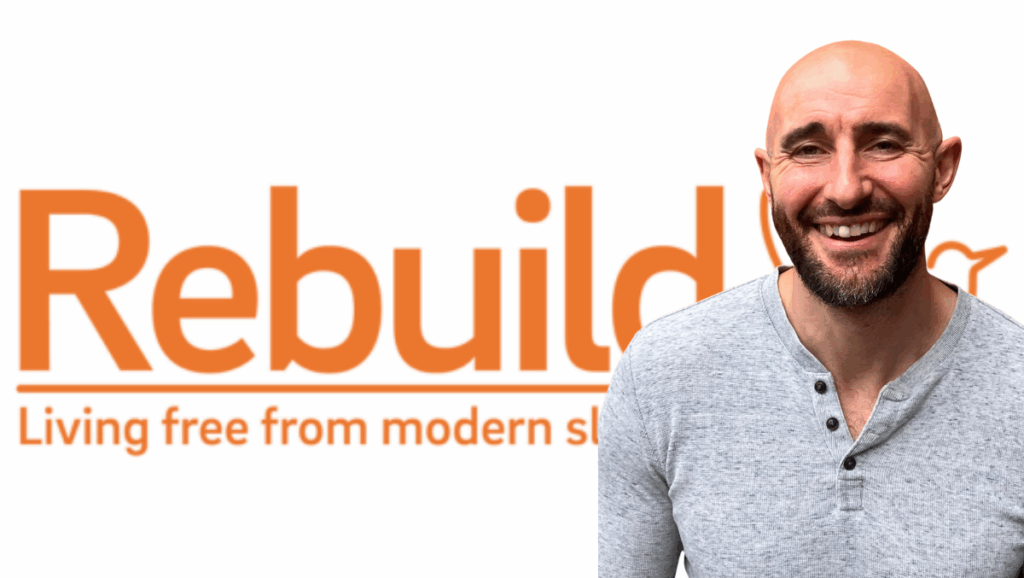
The first person I ever met who had been trapped in forced labour was a 19-year-old Slovakian lad in Derbyshire, writes Paul McAnulty.
I was working for a recruitment firm and we’d been tipped off by security guards at a chicken factory, who’d watched him hanging outside the gates every day.
When we spoke to him, he told us his story.
He had grown up in an orphanage in Slovakia but was booted out when he was 18. He was picked up by people traffickers who told him they were his adopted family and, because he had a profound but undiagnosed learning difficulty, he believed them.
They brought him to the UK and put him to work at the factory, where he worked without earning a single penny, because his exploiters took all of it off him.
He got the work through an agency and wasn’t always picked for a shift. If he wasn’t picked, his exploiters would beat him, so he’d wait outside the gate until home time and pretend he’d worked that day.
They’d always found out, of course, but only at the end of the week, which meant he’d only get one beating instead of five.
Life parallels shaped my career
Meeting him shaped my commitment to ensuring people who’ve been controlled, hurt or dehumanised have somewhere safe to rebuild their lives, and it’s why I believe so deeply in the work we do today at Rebuild.
It also made me reflect on my own life up to that point and how there were strong parallels between us.
For a start, we’d both had experiences of sleeping rough. We’d both grown up being physically assaulted by people who should have looked after us.
And we had both been victims of forced labour.
My experience began when I was 12. I grew up in a family with a dad who was alcohol dependent and who was violent to my mum, me and my brothers.
He put me to work washing caravans, for two quid an hour, outside school hours.
Every time I was paid, my dad would demand my little brown envelope of money. He’d give me some of it and take the rest, which he’d spend down the pub. If I spoke up, I’d get a kicking.
When I was 17, my mum went into a women’s refuge. She said, don’t worry I’ve paid the bills, but my dad lied and said he was having to pay them. And because of that, he was going to need all of my money.
By that time I was working 30 hours and getting paid £60. I knew he was lying, so I quit my job to teach him a lesson.
He threw me out of our house. I was homeless and I started sleeping rough, in Newcastle-under-Lyme. I did that for a while, managing to maintain a normal life but, worried that my friends would see me on the streets, I decided to move away, and came to Derby.
Getting on track
As it happened, one of my friends still saw me, on Iron Gate. He was studying at the University of Derby and he advised me to apply to be a student too.
I did and, because my grades at school were good, I was accepted. This meant I got a maintenance grant and I could get my own home.
To cut a long story short, after university, I joined Derbyshire police, where I met some truly altruistic and amazing people. Eventually I ended up working in the East Midlands Serious Organised Crime Unit, which investigated any crimes committed by gangs, including drugs and slavery.
That sparked my interest in helping tackle exploitation, so when I left the police I worked in the NGO and the corporate retail sector, in areas where I thought I could make a real impact.
That was when I saw the hidden infrastructure that sits behind the retail industry and learned how forced labour in the UK is at its height at Christmas.
Numbers, not people
Since everyone is busy ordering their presents and food, there is huge pressure on warehouses and the supermarkets to deliver everything.
At peak times they need to take on lots of workers to achieve this. They’re supplied by on-site recruitment firms, but labour isn’t always freely available at peak times and at the scale these firms operate it, the risk is that people are seen as numbers, not human beings.
So when someone pulls up in a minibus with eight of their cousins, companies should do the due diligence and say this is not for us.
But they don’t always. Sometimes when they’re desperate and they’re up against targets, they’ll just take them.
Often these lapses aren’t malicious, they are just the reality of fast-moving environments under huge pressure. But they create gaps where exploitation can thrive, and, while I’ve seen plenty of dedicated, ethical and responsible labour providers and businesses working hard to address these risks, exploited people were still ending up working for legitimate firms.
They’re often the ones offering next-day delivery, and although they offer legitimate work for a legitimate wage, the exploited worker will have their money stolen from them by a trafficker or used to pay off a pseudo “debt”.
Powerful and smart
Real progress has been made over the past decade, but as supply chains shift and labour models become more complex, our collective vigilance has to evolve alongside them.
The gangs are powerful and they’re smart, and tackling exploitation is a mammoth task.
It’s estimated that there are 140,000 people experiencing forced labour in the UK, among the 50 million modern slaves worldwide. That’s more than at any other time in human history.
Typically, they are recruited by criminals using physical coercion or trickery.
For example, within two hours of Putin’s invasion, traffickers were on the borders of Moldova, Poland and Romania, posing as humanitarian workers offering people safety, but subjecting them to exploitation.
They might put them to work through legitimate means, or they might join the UK’s grey market, where people work for cash in hand, or work as sub-contractors for sub-contractors, creating a labour chain which gets harder to track the further you go down.
And so the potential for forced labour in construction, the fashion industry and fast-food delivery, as well as the car washes, nail bars and Thai massage parlours, is huge.
Rebuilding lives and restoring hope
Organisations like Rebuild East Midlands exist to help the victims of all of this. Exploitation thrives in silence, but recovery thrives in community and we work with and stand alongside people who have been exploited and are now reclaiming safety, choice and independence on their own terms.
We find them safe housing, help them to stabilise mental health, access training or employment, or simply provide day-to-day basics like food, clothing and transport.
Every person’s journey is different and our role is to offer consistency, safety and opportunities for healing and growth.
Recovery isn’t just possible, it’s achievable, and our people achieve it every week because they have right support around them.
I still see the parallels between myself and the people we work with. I recognise the quiet resilience you build when you survive though hardships – and I see it every day.
And I recognise how, even though they are all victims, many of them didn’t see themselves as such.
Nor did I. I just thought it was great to be earning money. And many victims consider that the money they are making here, even when the traffickers have taken their cut, is better than they can make at home.
Consumers are price-conscious
Alternatively, they feel indebted to or afraid of their exploiters, who will use threats of – and actual – violence to ensure compliance.
It’s those parallels and my own lived experience that makes me want to help and is why I also want to urge consumers to think of the part they play in all of this.
I don’t want to be too self-righteous. I get it. Money is tight and people are price-conscious.
They want to provide for their families, especially at Christmas, and won’t think too deeply about how they can buy a dress made in the Far East, shipped over to the UK and delivered to their door for just £3 – and who was involved in getting it here.
Things are definitely getting better. More customers are looking into ethical purchasing and there are excellent retailers out there providing what they need, albeit at a higher price point.
There is still a long way to go, but until exploitation is a thing of the past, there will be a need for organisations like ours.
And we’re determined to meet that need with compassion, expertise and hope, not just at Christmas, but all year round.