

From November, school Ofsted reports are getting a major shake-up, writes Janine Dix, Headteacher of Esteem North Academy.
Gone are the blunt, brief verdicts of “good”, “outstanding” or “requires improvement” and in their place, a new way of doing things – a report card, giving parents more detail about what’s really going on in the classroom.
So, what does this mean for mums, dads and carers choosing schools – and how can you use the new report cards to make the best decision for your child?
1 Look beyond a single word
For years, schools have been summed up in just one phrase – Inadequate, Requires Improvement, the legendary Good, Outstanding.
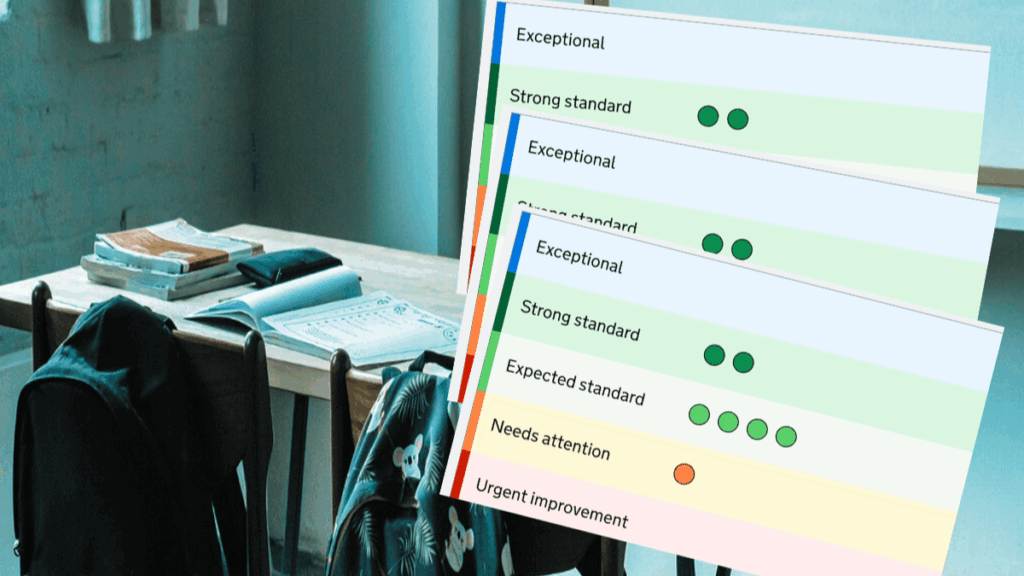
Now these are being phased out in favours of scorecards, which will instead give ratings across SIX main areas:
- Inclusion
- Curriculum and teaching
- Achievement
- Attendance and behaviour
- Personal development and wellbeing
- Leadership and governance
They will also give ratings for Early Years and Sixth Form provision, if applicable.
This means you’ll get a more rounded picture. A school might not be perfect everywhere – but you can see its real strengths and where it’s improving.
But there’s more, because schools will be graded according to a FIVE point traffic-light scale – albeit a traffic light which ranges from red (at the least satisfactory end of the scale) to dark green and blue – with each colour signifying a grading that is reminiscent of the original four phrases.
They are: Urgent Improvement, Needs Attention, Expected Standard, Strong Standard, Exceptional.
Use the detail, not just the traffic lights
So we have gone from words to traffic light colours, but parents shouldn’t just glance at the colours before making their decision. Each section has a drop-down explanation, and context matters.
If a school scores amber for “Achievement”, what does that mean? The rating system will tell you – and it might just indicate that school has just introduced a new curriculum and are prioritising wellbeing over test scores.
This will give parents more information and lead to more understanding of how the school is operating and where its priorities lie.
Pay attention to what matters most to your child
And its these priorities which are important, because just as every school is different, every child is different.
For some, strong maths and English results are the top priority. For others, inclusion, wellbeing or SEND support are vital.
The new reports make it easier to see how schools perform in the areas that matter most to your family.
Don’t just look at the blue “exceptional” boxes or green “strong standard” ones – check the amber or red ones too and weigh up whether those areas affect your child. It might be that their colour works to their advantage, because it indicates the school is placing its emphasis on an area which will help your child to thrive.
Expect more pupil voice
We’ve experienced some pilot inspections at our school and inspectors spent more time listening to pupils and visiting classrooms, and less time grilling staff or paperwork during their visits.
For parents, this is good news. It means that they can take confidence that student experiences, not just statistics, are shaping the judgements that schools are being given.
Remember – it’s still only a snapshot
Ofsted reports are important, but they’re not the full story. A school inspection takes just a few days – a short time frame within years of education.
So my advice is, when looking at schools, widen your source material. Look at how they are communicating the good work they’re doing year-round, through newsletters, social media, parent updates and community links.
A strong Ofsted report is reassuring, but ongoing openness and communication matter just as much.
Ask questions and visit in person
Don’t just base your decision on what you see on a report card – instead, use them as a starting point.
Take them to open evenings, ask how the school is addressing amber areas and see whether the culture feels right when you walk through the doors.
The new Ofsted report cards are designed to give families a clearer, more detailed picture.
Use them as just one tool from your toolkit, alongside your own research, school visits and conversations, to find the school that’s the right match for your child.